|
Money is a memorable classic rock song written by Roger Waters for Pink Floyd's eighth studio album, The Dark Side of the Moon. Music critics claim the lyrics convey a negative, pessimistic view of money—being all about self-interest, selfish pursuits of wealth, greed and materialism.
Maybe the song was simply an ironic "wink" from Waters! The song was a huge financial success for Pink Floyd upon its release in 1973. And as of 2025, Water's estimated net worth is $310 million!
Money can also be an incredibly positive and powerful tool. It offers freedom, flexibility and independence. Plus, it's a major influencer for one's decisions—personal and professional.
Our featured Results Report interview is with someone who knows lots about money.
Kevin Koharki, MBA, PhD, is an Associate Professor at Purdue University and founder of CAE Consulting. He has a BS and PhD in Accounting, plus an MBA in Finance from Penn State University.
When Kevin isn't in West Lafayette, Indiana teaching at Purdue—he's traveling the world. Speaking and consulting with companies of all sizes in varied industries, including the Fortune 100.
As you'll soon see, whether you're a CEO, business-owner, C-suite leader, sales pro or have another important role and are a significant contributor to the success of your company or organization...
Kevin's financial insights and knowledge aren't about mere information. They're about the opportunity for you and your teammates to have explosive transformation!
Jeff Blackman: How does financial acumen and understanding influence a company's culture, trust and potential?
Kevin Koharki: Allocating capital proficiently requires the development of a Capital Allocation Mindset. When developed correctly, employees learn to speak a common language, it's the building block to developing mutual trust. Once achieved, organizations can more easily get employees to align on a common purpose.
The ability to communicate effectively and align on a common purpose enhances a culture with continuous improvement. Plus, accountability through informed decision-making.
No different than what Bill Walsh accomplished as the head coach of the San Francisco 49ers football team in the 1980s with his Standard of Performance. He created a dynasty that sought perfection in every aspect of the 49ers. {Jeff's note: Walsh's Standard of Performance was his leadership philosophy. He was obsessed with exhaustive preparation, demanding attention-to-detail and unwavering excellence. Walsh believed, "The score takes care of itself."—when you're focused on process and methodology before results.}
JB: What happens when leaders and their team don't understand the connection between their decisions and the financial impact of those decisions?
KK: An organization and its leaders fail at their primary responsibility—to allocate capital as effectively as possible, (at least if Warren Buffett is correct). This means they're not generating the returns necessary for sustainable long-term financial performance. At best, they'll achieve average performance. Yet typically, it's worse.
JB: So how do you empower employees in; sales, ops, parts, service, R&D, HR, legal, warranty, manufacturing, etc. to make better business decisions?
KK: I help companies/leaders create a Capital Allocation Mindset so employees learn to think and communicate with the language of business. Once they understand how their roles, decisions and actions impact their organization's financial performance, they think and act differently—and make more and better-informed decisions. They believe they're part of something much greater than themselves: a team!
JB: What do you actually teach folks?
KK: Step 1: Understand how to read, analyze and interpret financial statements. This lays the groundwork for employees understanding the importance of their decisions on their team and company.
Step 2: Understand what capital allocation is and isn't. Plus, how to make more informed decisions—to maximize opportunities while limiting risk.
Step 3: Understand how investors and analysts perceive their firm's performance. And how these perceptions help or hinder their ability to allocate capital effectively.
JB: What are the outcomes internally? And externally with customers, clients or prospects? 
KK: More effective and efficient communication with key stakeholders. Sales teams learn to identify their customers' pain points and present solutions that solve these problems because they better understand their customers' businesses, objectives and needs.
Procurement learns what matters most to their suppliers, allowing for more effective purchase negotiations. R&D learns the most efficient and effective ways to construct investment proposals for projects they're working on. The list and impact is endless.
Internally, silos are eliminated as individuals learn how to communicate with a common language. This builds empathy as employees now understand the viewpoints of people not in their specific departments. This reduces assumptions teammates make about others' motivations. It creates greater trust and camaraderie.
JB: When it comes to any financial decision, professional or personal, what questions should one ask first of themself, their team or others?
KK: Do we understand from a financial perspective, the goal(s) we're trying to achieve? Do we have the knowledge and resources to address this problem? Will additional resources be needed?
Most problems require simple math and basic assumptions. With the requisite knowledge, any team or individual can somewhat quickly determine if the goal they're pursuing is feasible with their current resources. Yet if teams don't know their objectives or how to measure success, they'll only be successful via luck!
JB: What are the keys for an individual or company—to drive revenue, growth and profits?
KK: It's all about how well a person or company allocates capital and/or resources (i.e., money or time). What returns are being generated from capital and resources.

When done well, individuals and businesses flourish. When done poorly, financially—they fail.
With resources, I think of a service business investing time in building, understanding and maintaining customer relationships. Enabling them to solve customers' problems. This, along with expense-management, should drive revenue growth.
JB: You've said, "People don't make poor financial decisions. They make uninformed ones. This isn't a gap in intelligence, it's a gap in connection. I help organizations close that gap." How do you do that?
KK: Ideally, understanding capital allocation is the number one job of every employee. People often attribute weak decisions to agendas or limited intelligence. When it's often about people simply not understanding what the best decisions are. I want clients to understand what good, better and best look like—so they allocate capital as efficiently and effectively as possible.
JB: How does your work turn "financial mindset" into a universal company capability—not in a technical way, but in a strategic way?
KK: A Capital Allocation Mindset helps employees make more informed decisions. Communicate more effectively with internal and external stakeholders. Align on a common purpose. Build an enhanced culture focused on continuous improvement and accountability. And employees innovate better, move faster, and are more confident with their decisions.
The benefits are many and significant when employees work together. It's hard for competitors to match it. Or beat it!
JB: If a leader or team is focused on driving profits vs. revenue—where should they start?
KK: This is a tricky one. There's a need to focus on both. High profits are terrific, but if a company's growth stagnates, the company won't be as valuable as it could be. Just as you can't, "cut your way to growth"—you also can't reinvest poorly in a business, because growth will stagnate or decline.
This is why it's vital organizations understand both how to invest to maximize growth and control expenses—to free up capital for growth.

Developing the right mindset to think about both components in unison is vital. For businesses with high growth, but low profitability, I suggest they start with their sales team to make sure they're not giving away profit to customers with perhaps poorly negotiated Terms & Conditions. Then, determine if Operations has the tools to work as efficiently as possible. Finally, see if there are unnecessary or redundant operating expenses.
JB: For more than 20 years, you've analyzed how individuals and their companies create or derail value. How do they create or derail it?
KK: Value is created or destroyed by informed or uniformed decisions. Informed decision-making means companies are effectively allocating capital.
Uninformed decision-making, unfortunately implies and causes the opposite outcome. It's simple cause and effect: optimal capital allocation improves financial performance. And then there's a direct correlation between financial performance and company value.
JB: You say organizations, their leaders and teams rely upon you to gain more than "financial literacy" they learn, "decision-making literacy." Meaning...
KK: Financial-literacy doesn't lead to decision-literacy. I've seen too many employees who understand how to read, analyze and interpret financial statements—but they don't know how to translate that knowledge into smart decisions. It's akin to reading a scoreboard with little appreciation for the game itself. You can see which team won the game, but you don't know how they did it.
I make sure clients can use their financial-literacy to ensure the quality of their decisions. Then, it's also important to effectively communicate the logic behind their decisions and the value it'll deliver. A CEO recently told me, "The goal is to make sure I no longer worry about every decision being made."
To reduce or even eliminate your worries—as you improve your financial-literacy, please take a peek at KevinKoharki. And if you'd also like to see Kevin's cool alphabetized glossary of financial terms with definitions, head to: KoharkiFinancialGlossary.
• • • • •
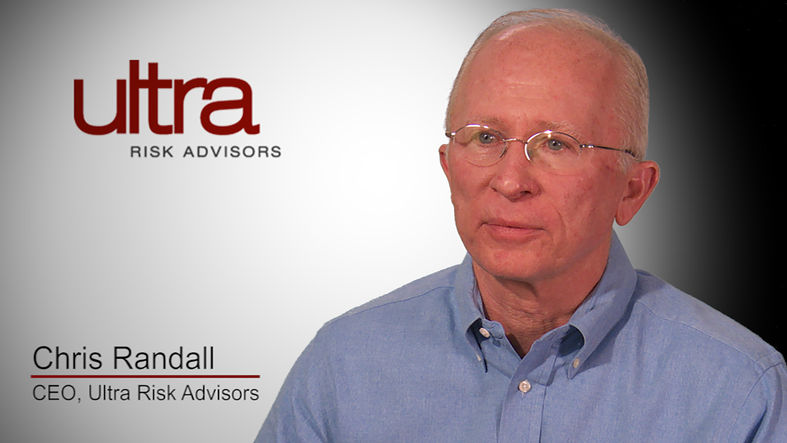
Want to see how Jeff Blackman helped one client drive results? Please take a peek at this video, where Chris Randall, CEO of Ultra Risk Advisors, talks about Jeff's positive and powerful impact on his team:
To explore how Jeff can help you and your team drive results—with speaking, training, coaching, consulting and ongoing reinforcment—in-person or virtual, please contact Sheryl Kantor at: [email protected] or 847.998.0688
|